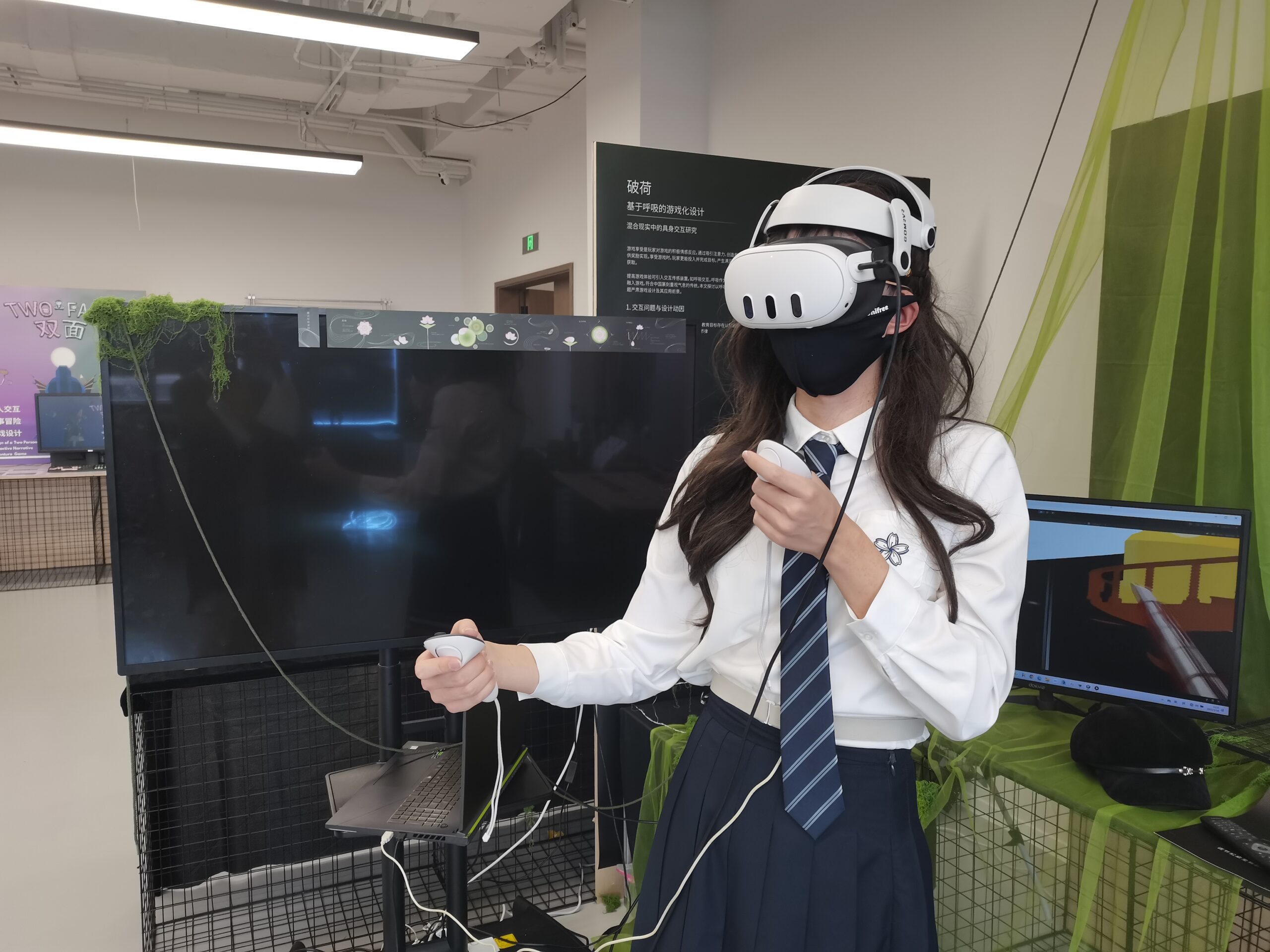
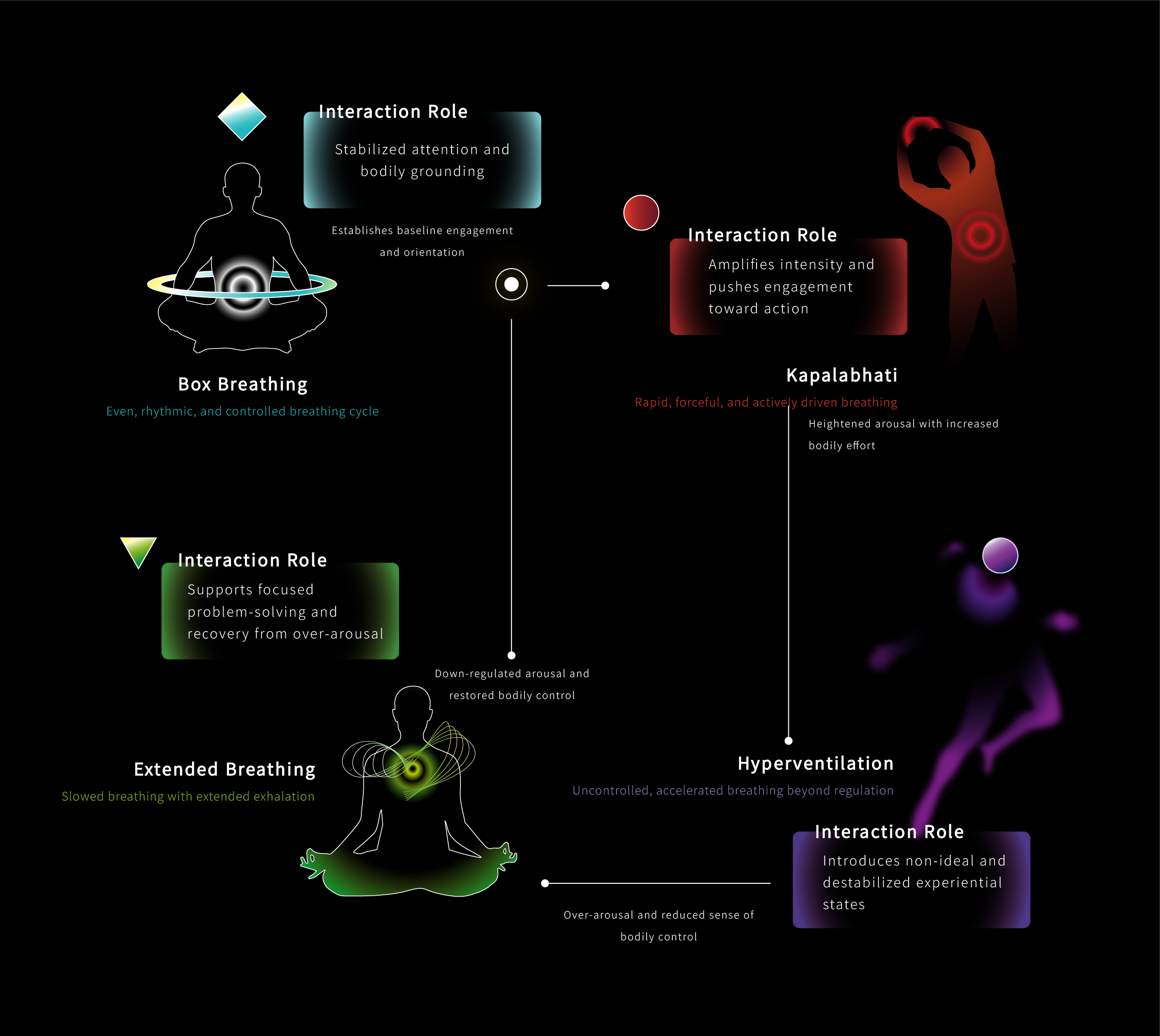
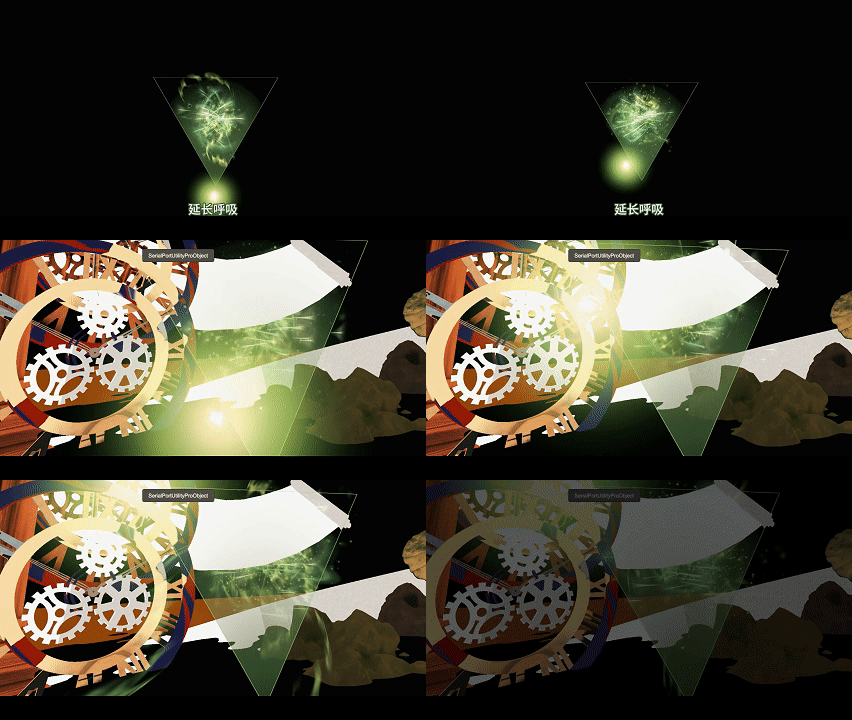
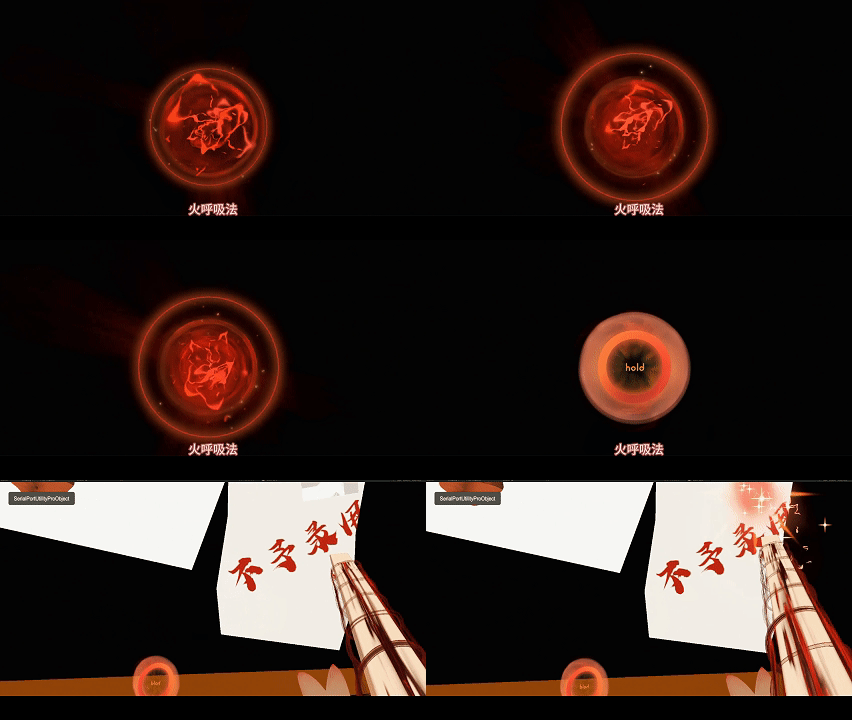
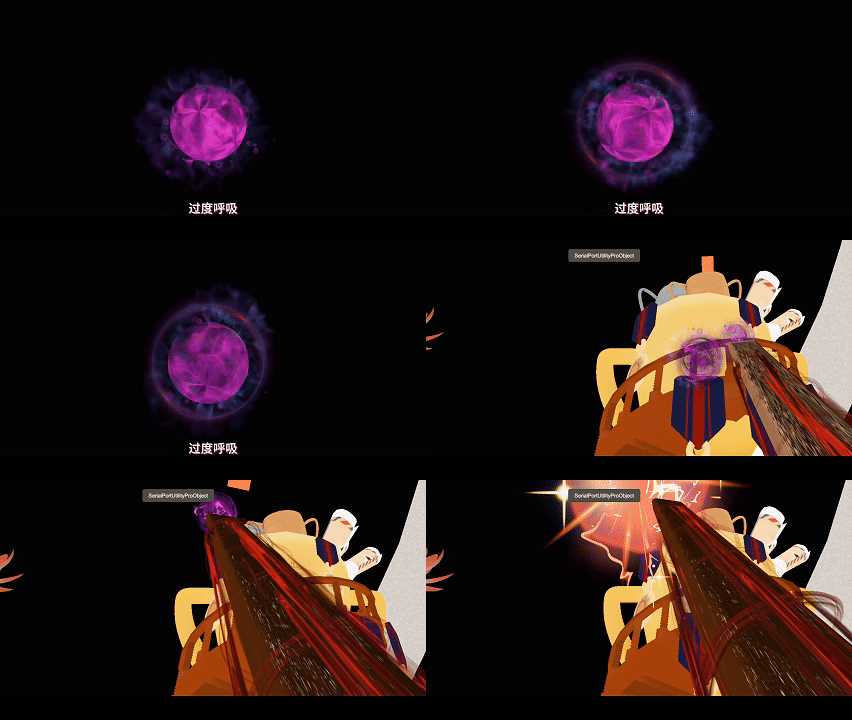
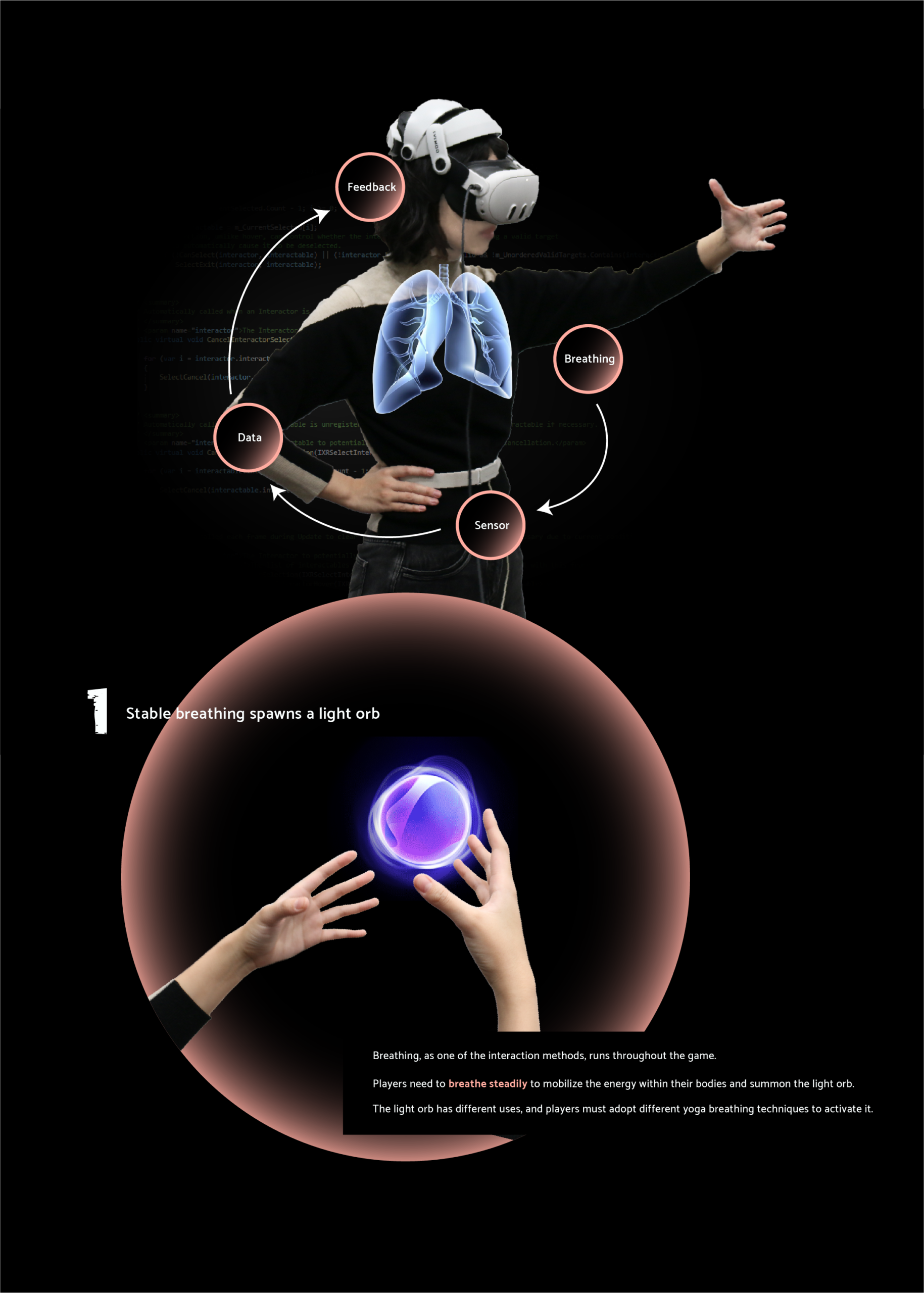
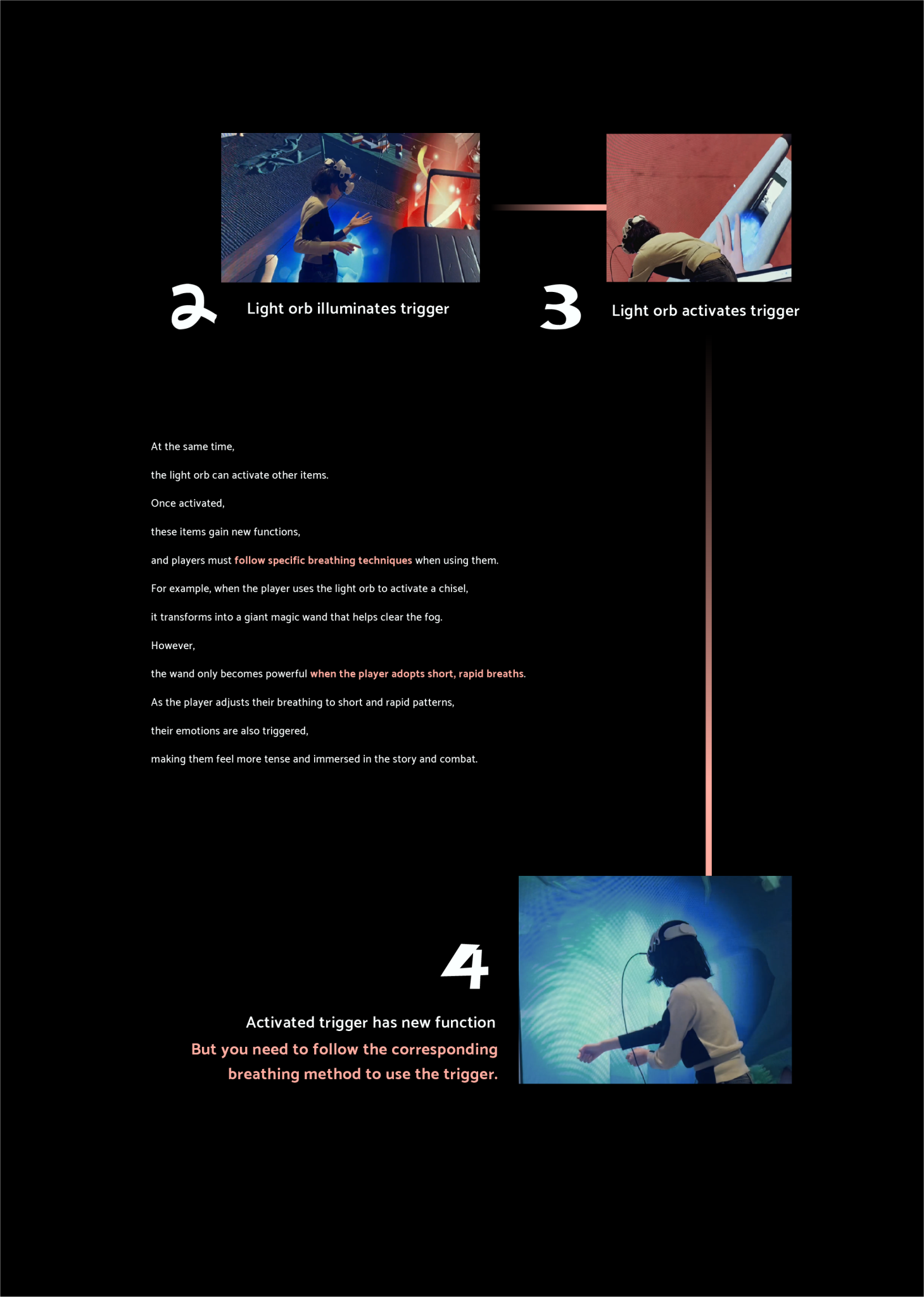
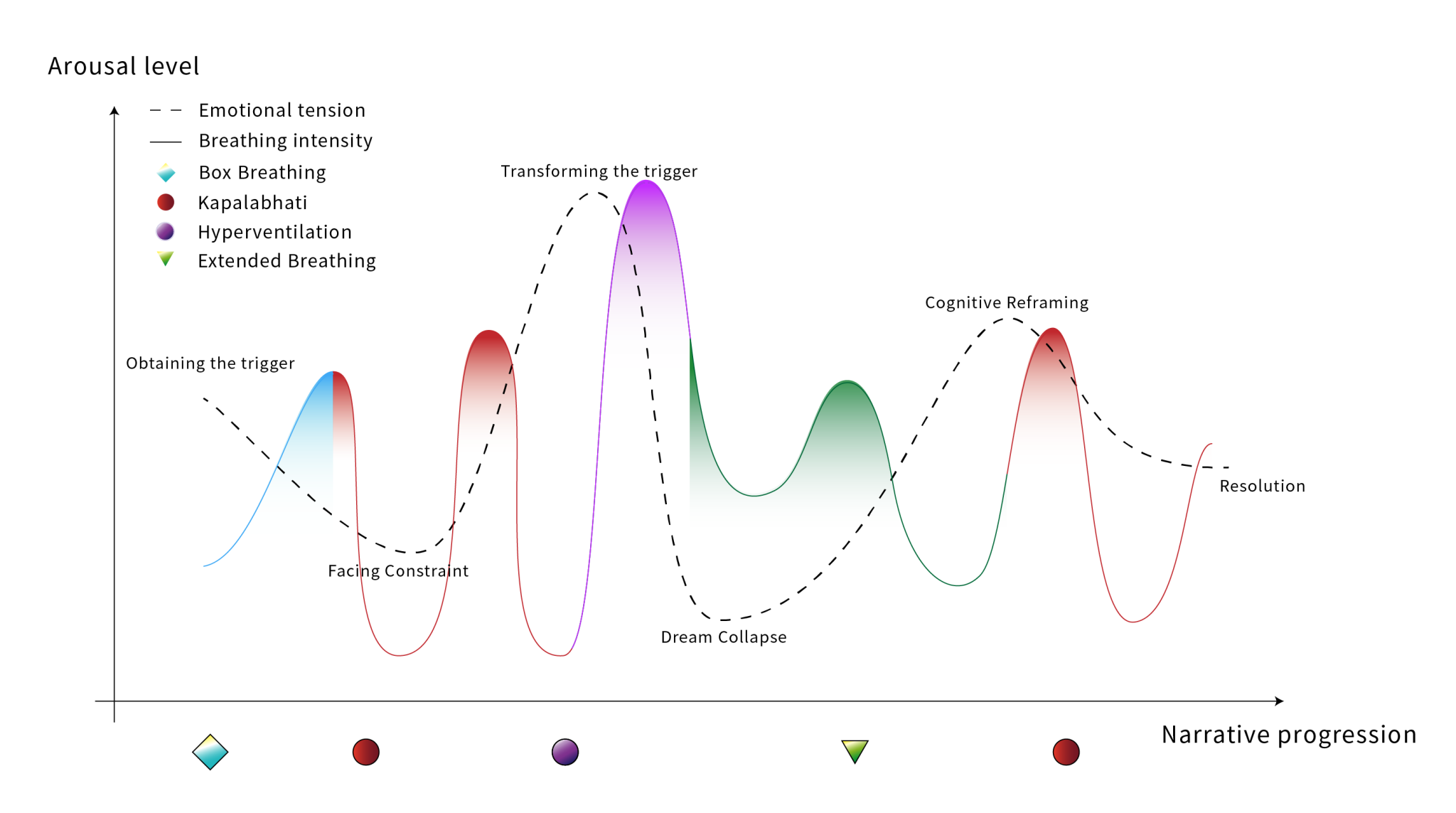
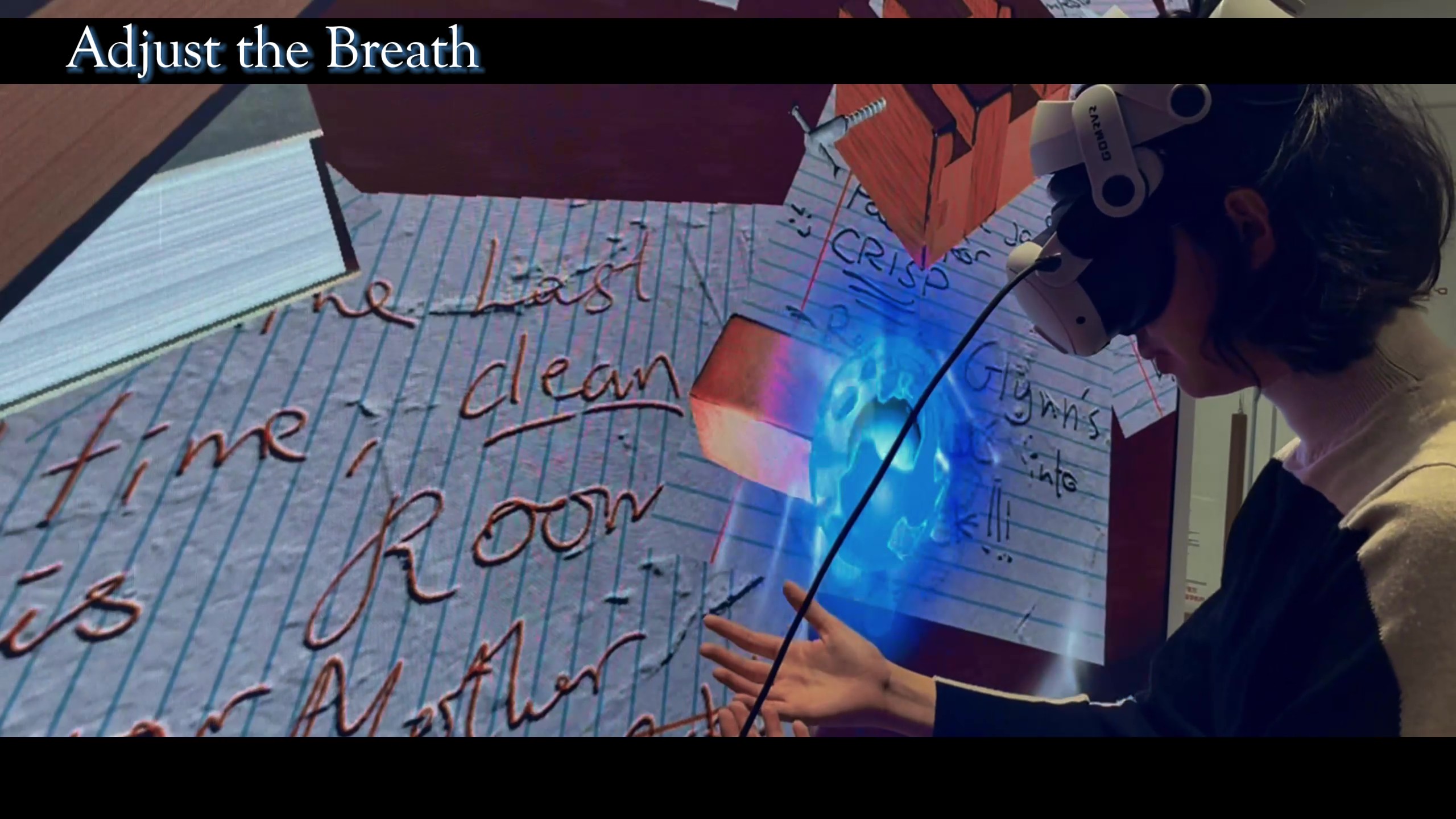
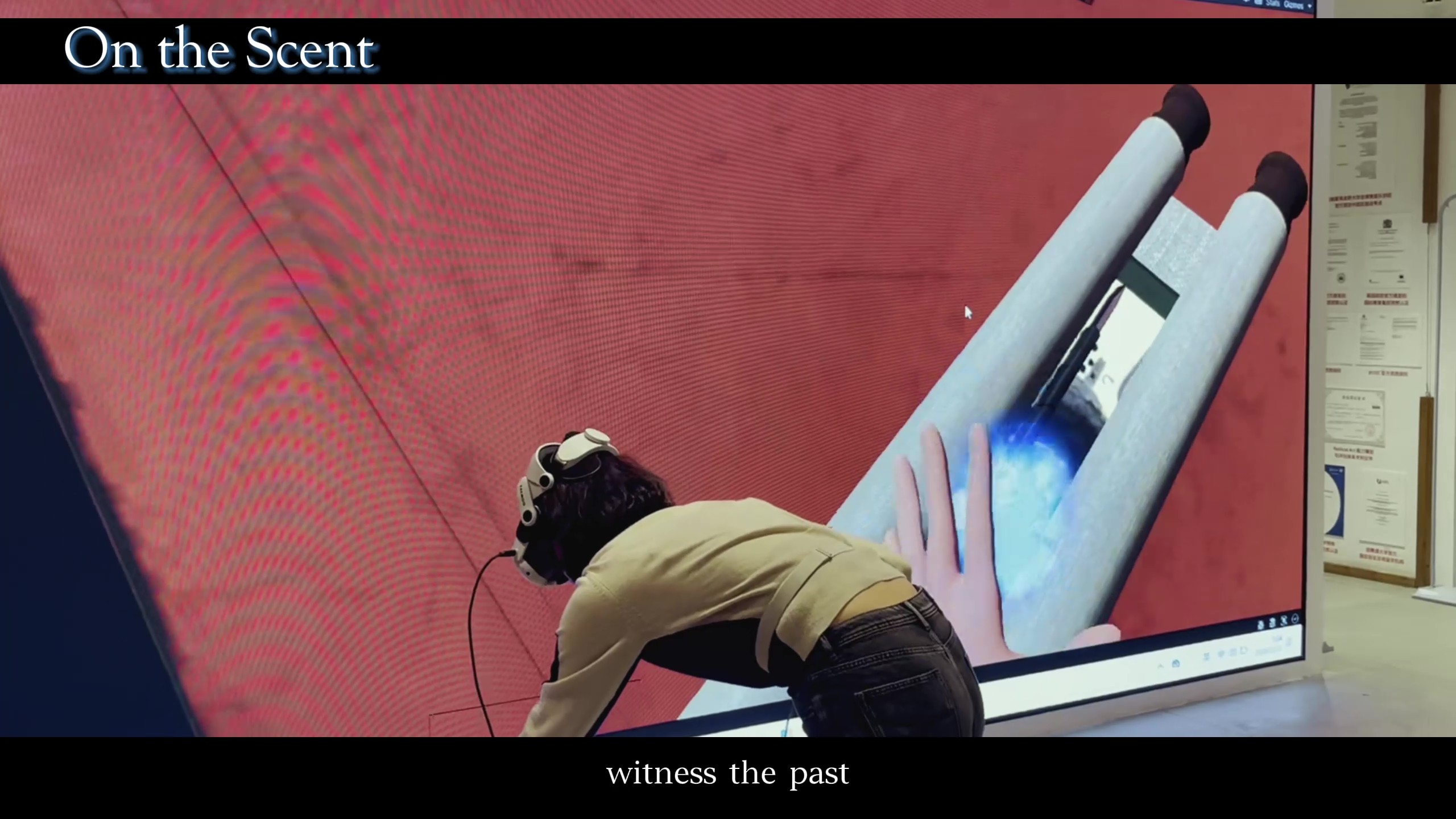
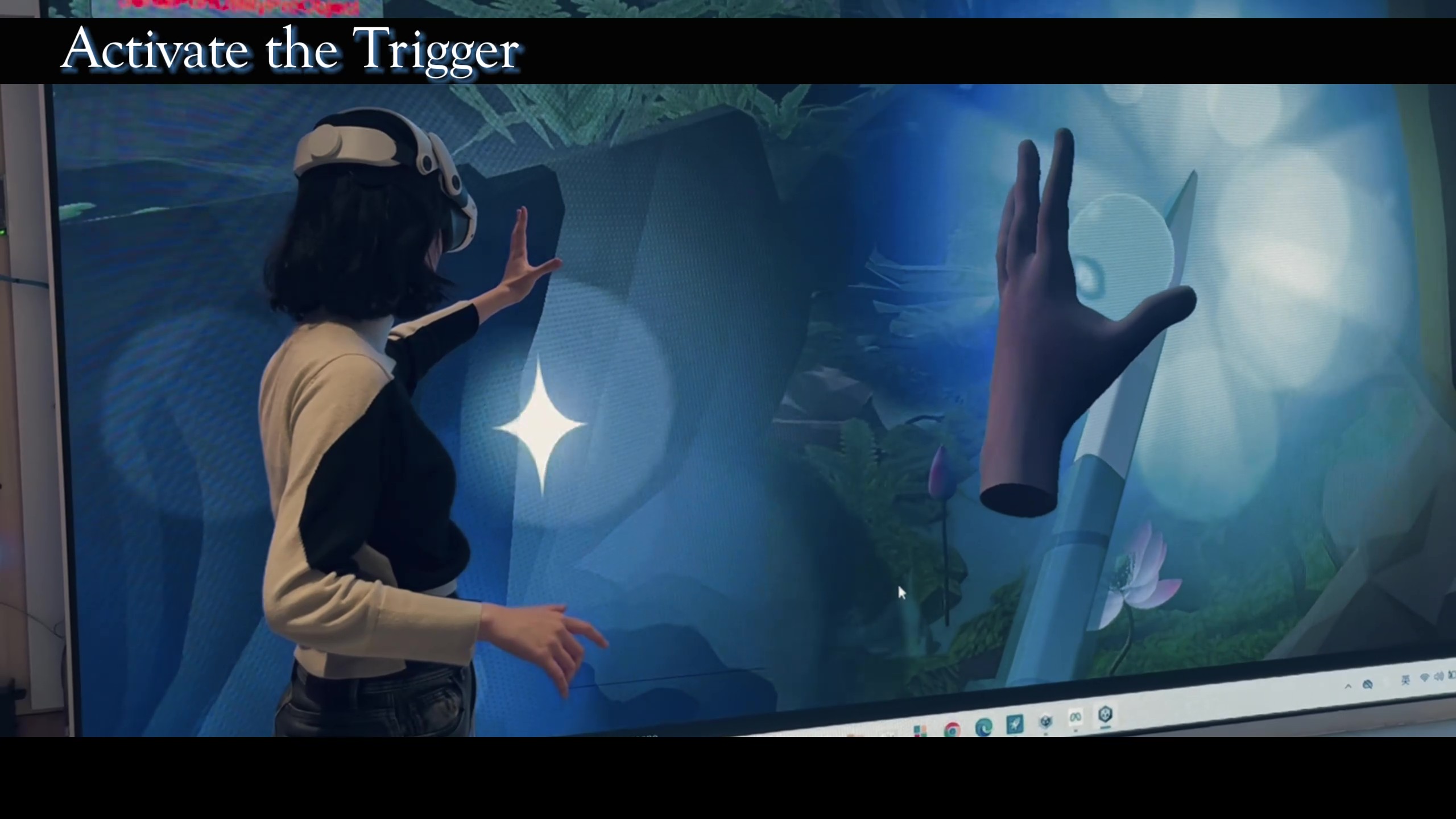
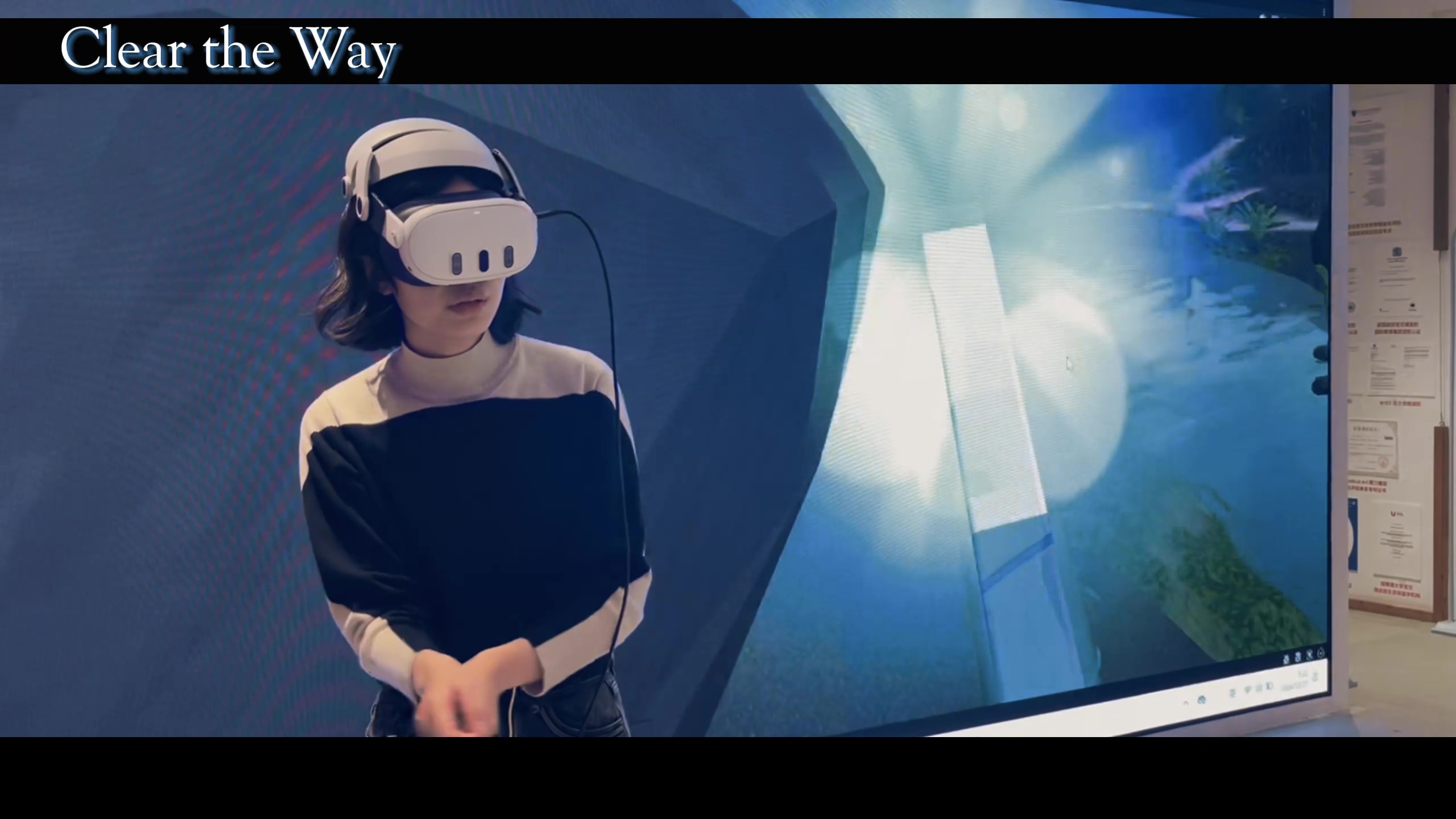
Designed to help users re-enter after setbacks, this system utilizes breathing patterns as the core input to regulate emotional states and guide users from tension to recovery.
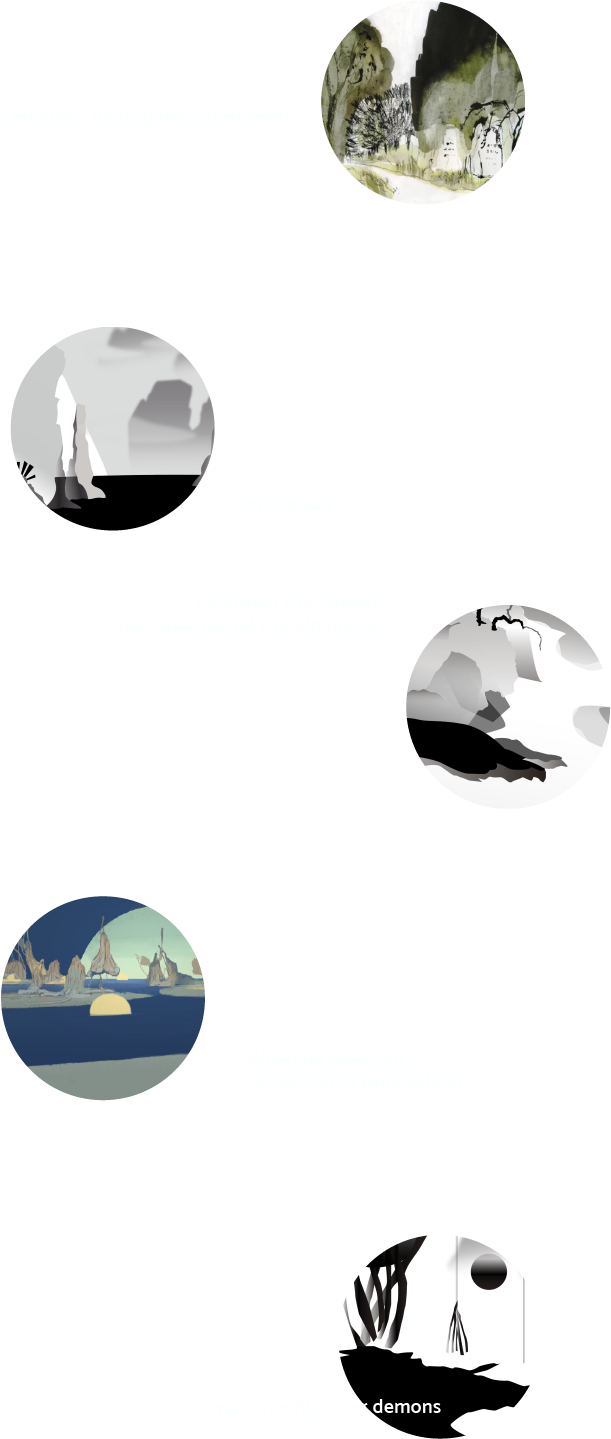
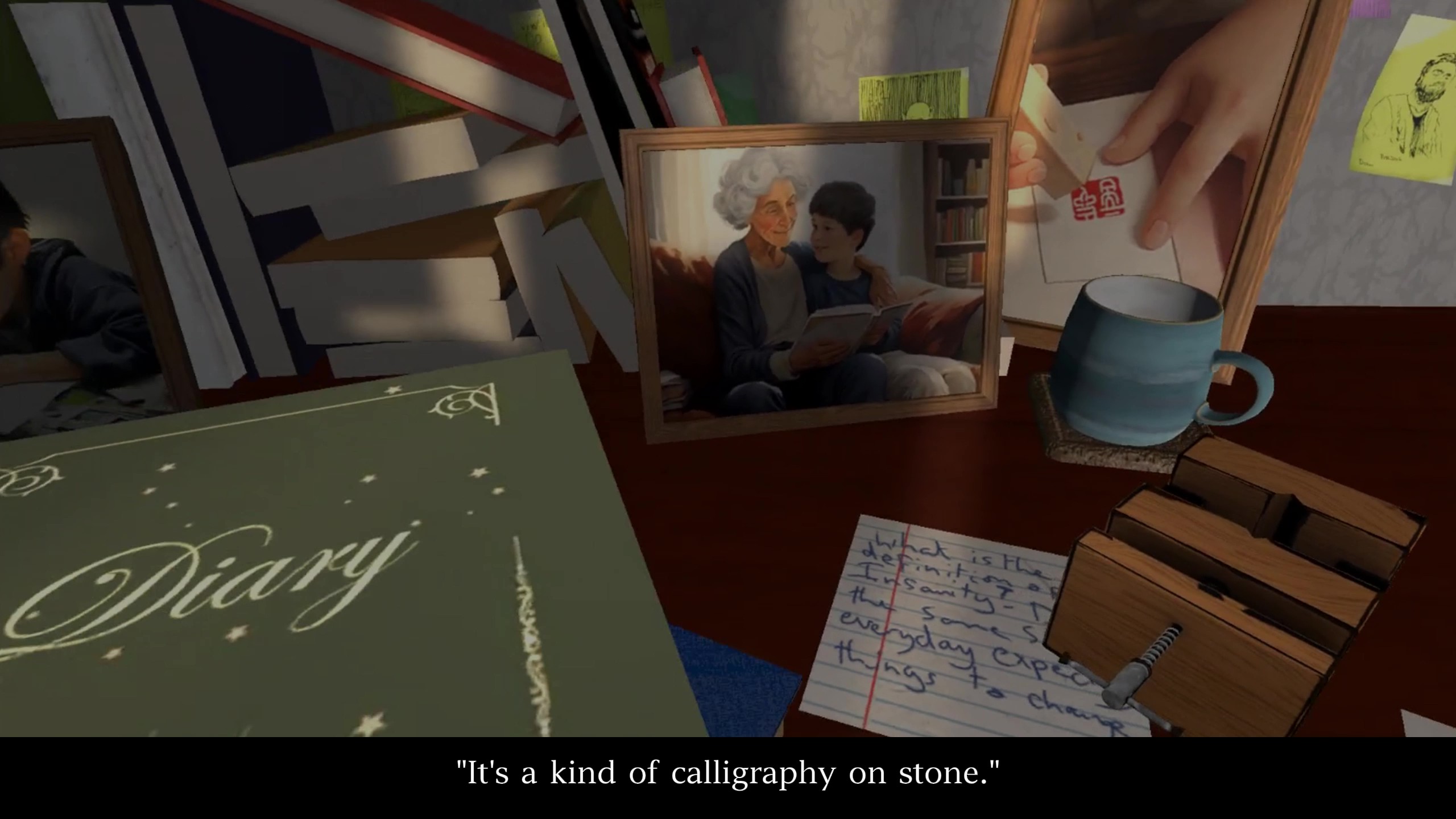
During his grandmother’s funeral,
the protagonist learned that he had some legacy to be inherited,
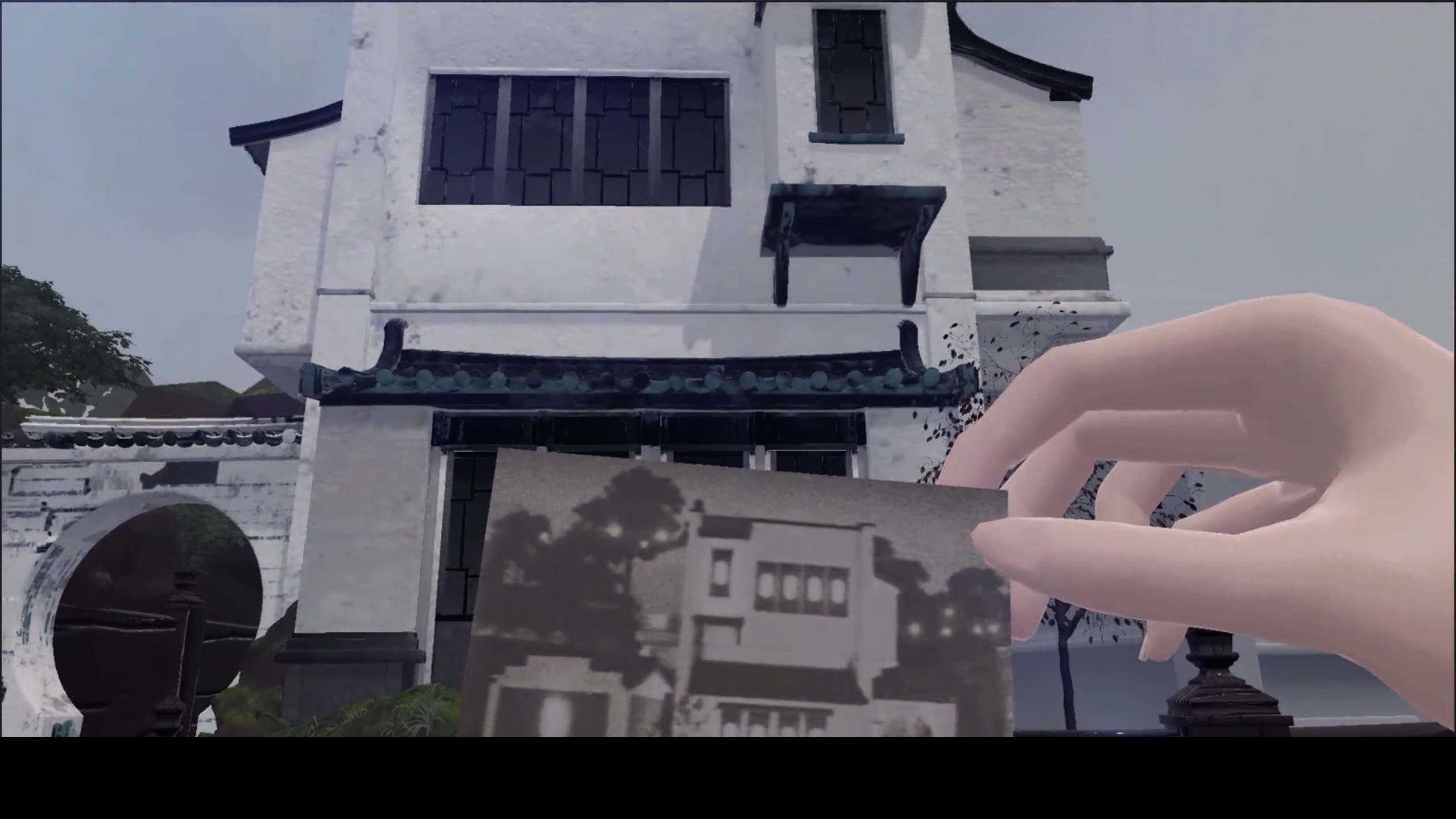
so he must reach the old house from his childhood.
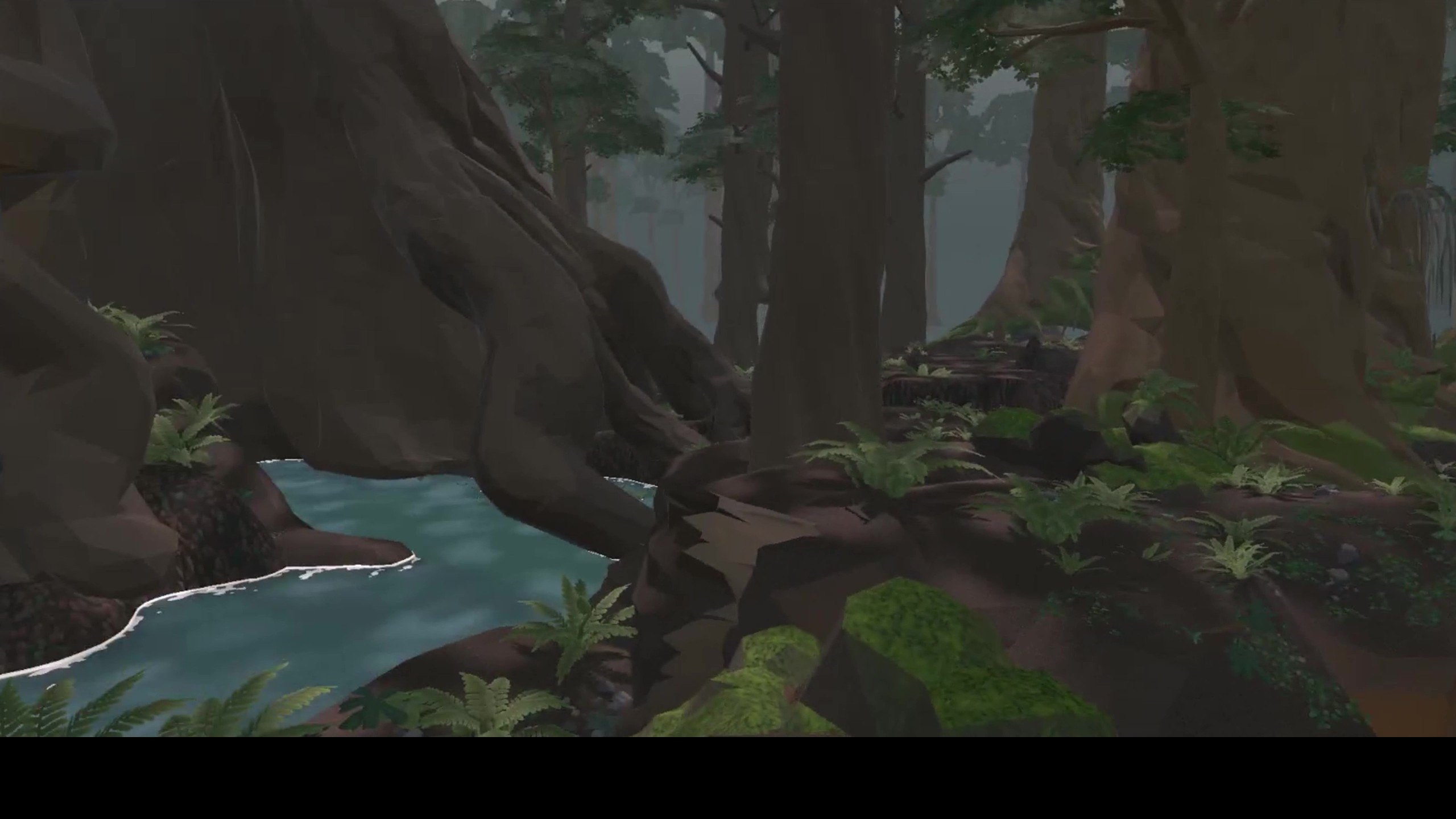
The path was desolated,
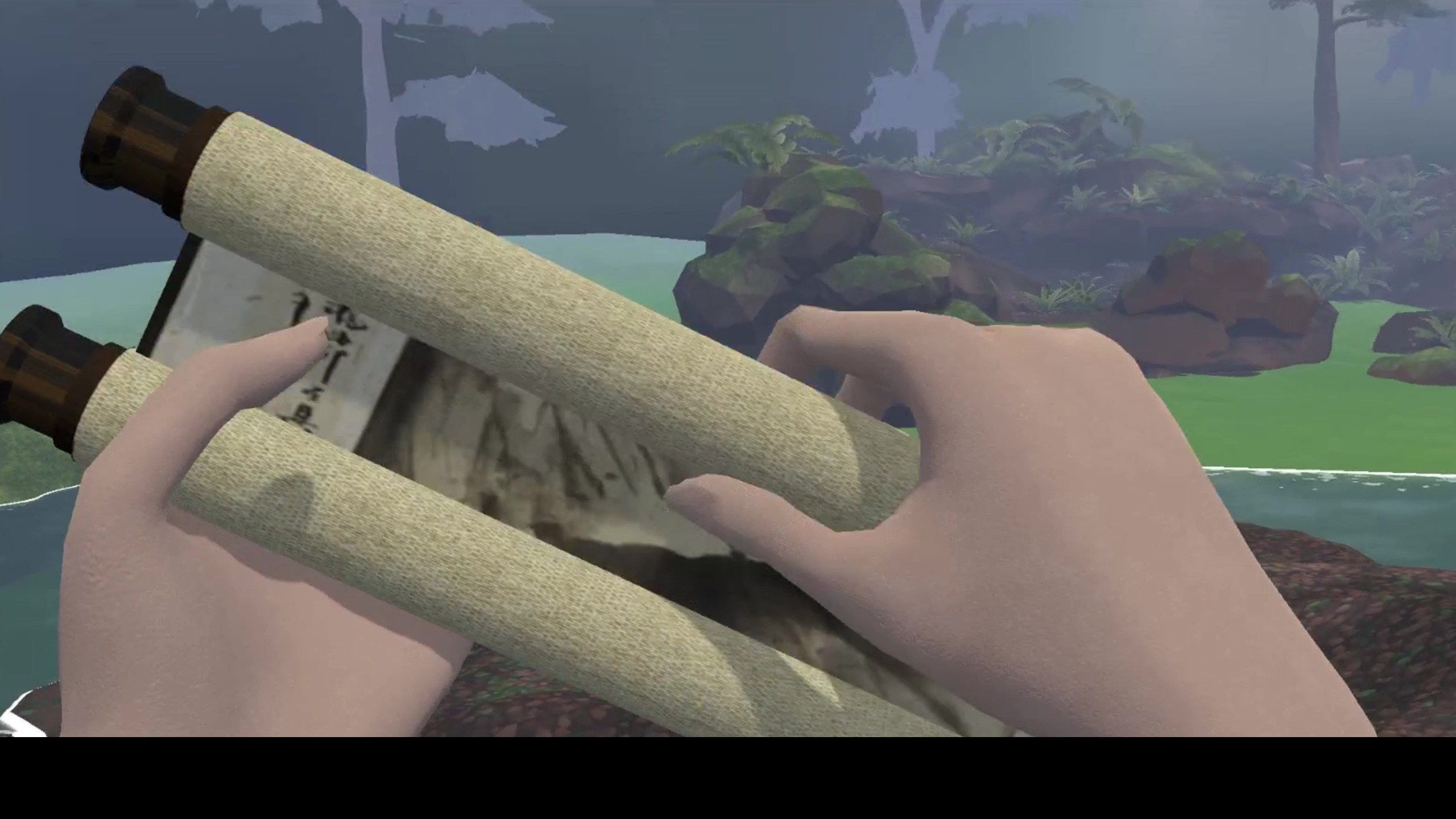
and he should explore the surroundings and look for directions.
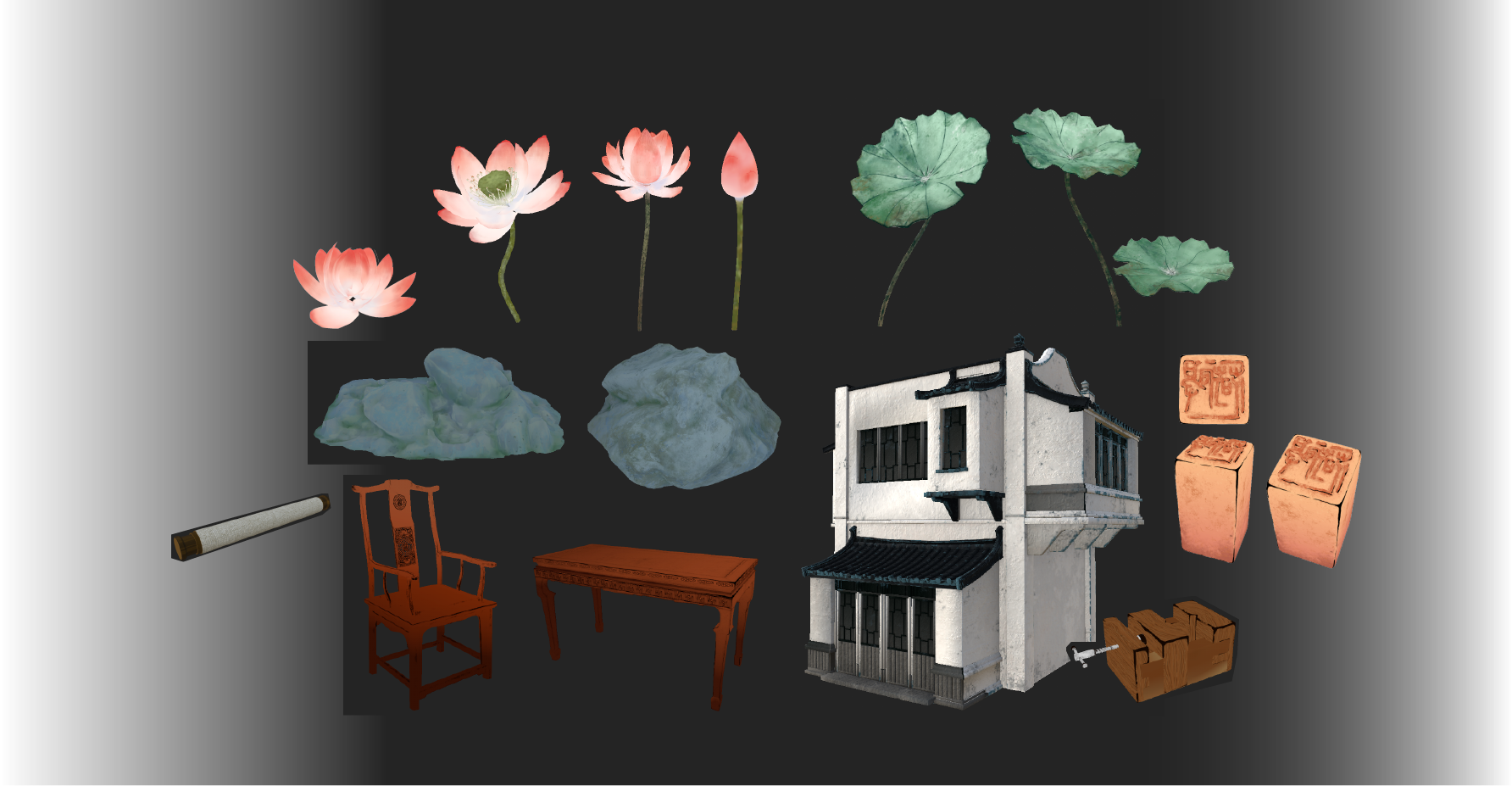
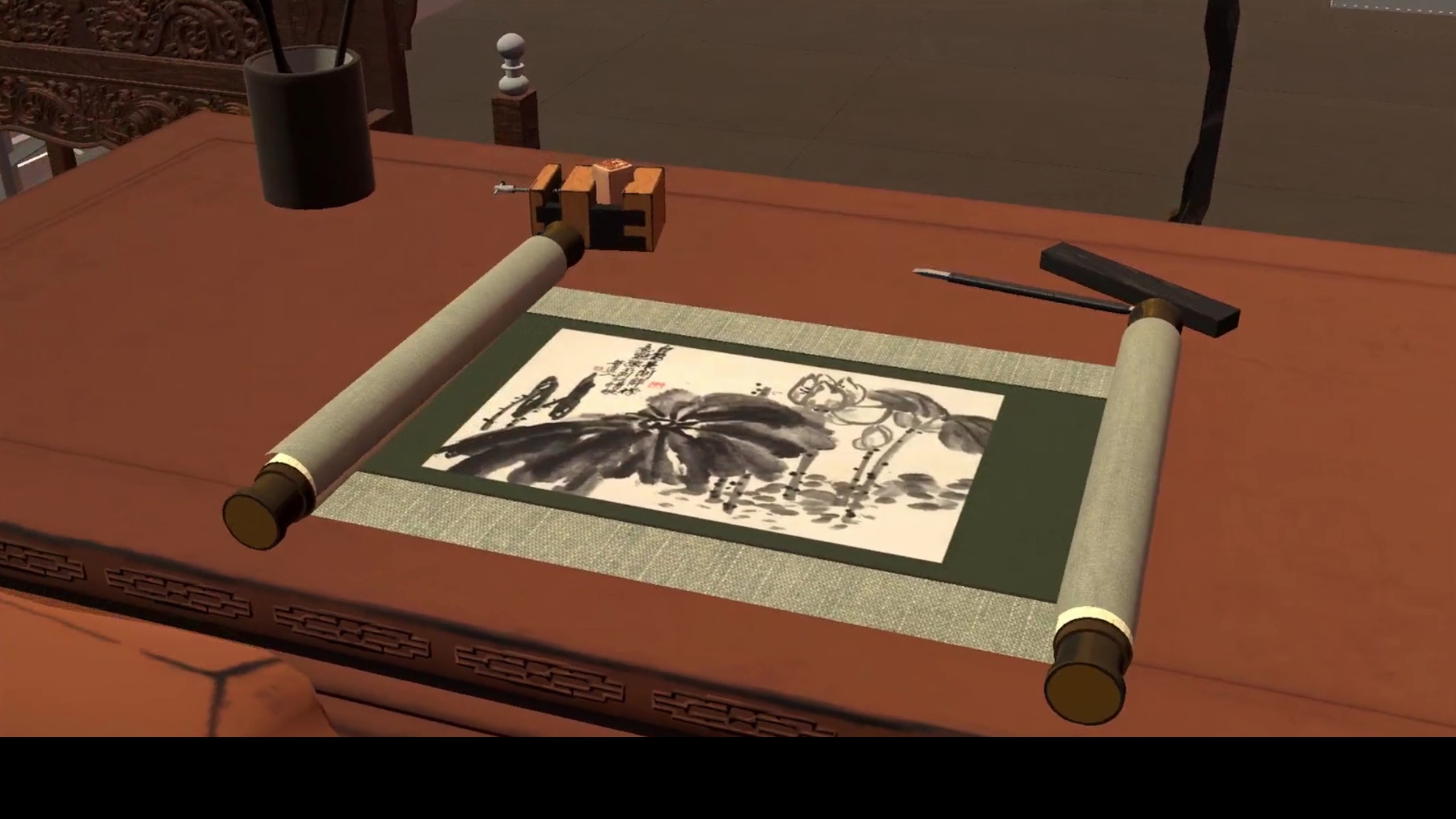
While reliving his memory, he discovered his family seal carving history,
Designed and implemented a breath-driven VR experience where breathing is not just a feedback mechanism, but the core interaction state
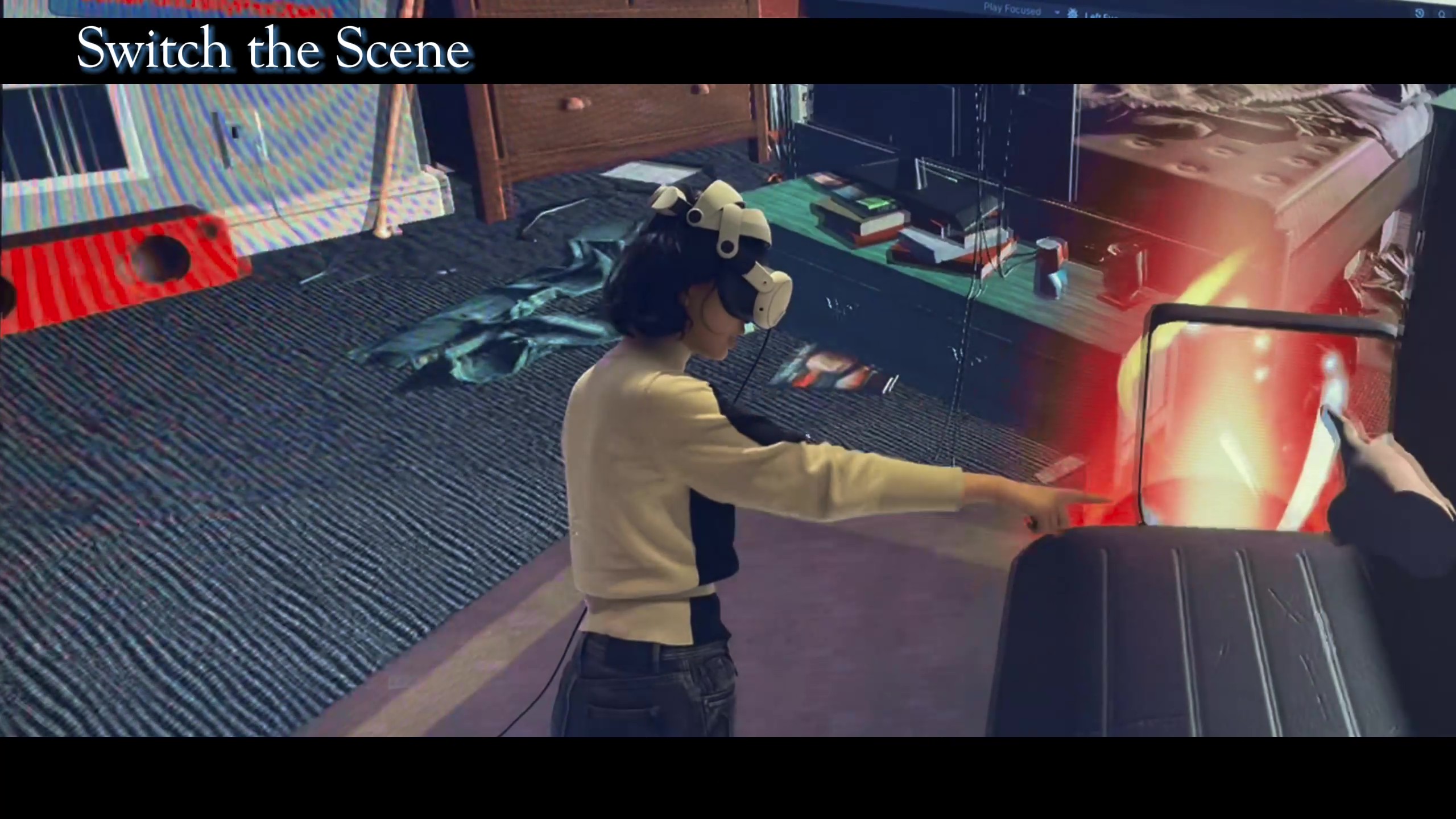
Mapped distinct breathing patterns to control movement, cognition, and narrative pacing, informed by user testing on physical engagement and cognitive focus.
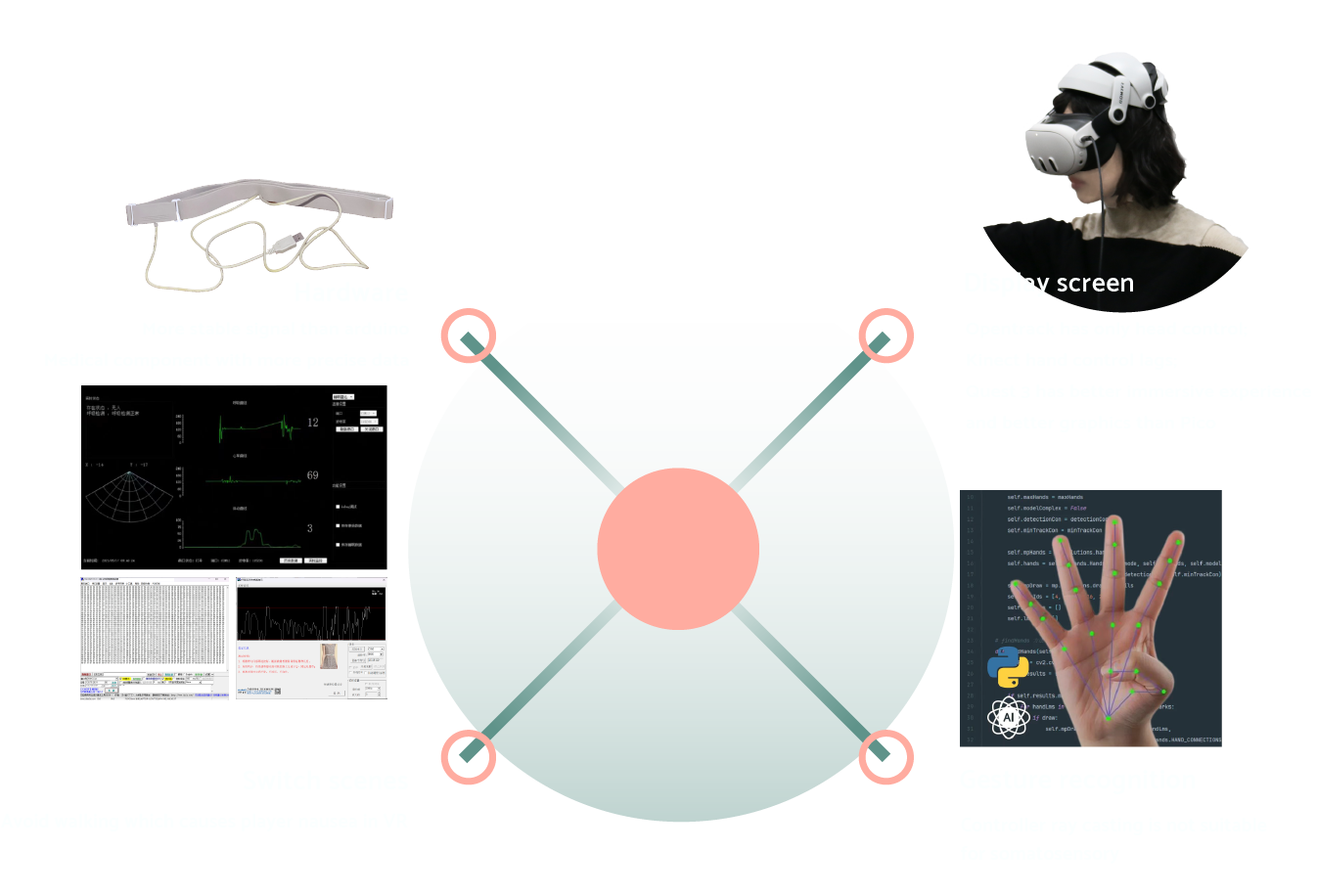
Independently built the system using Unity and sensor integration, translating breathing principles into intuitive, learnable interactions.
OVERVIEW
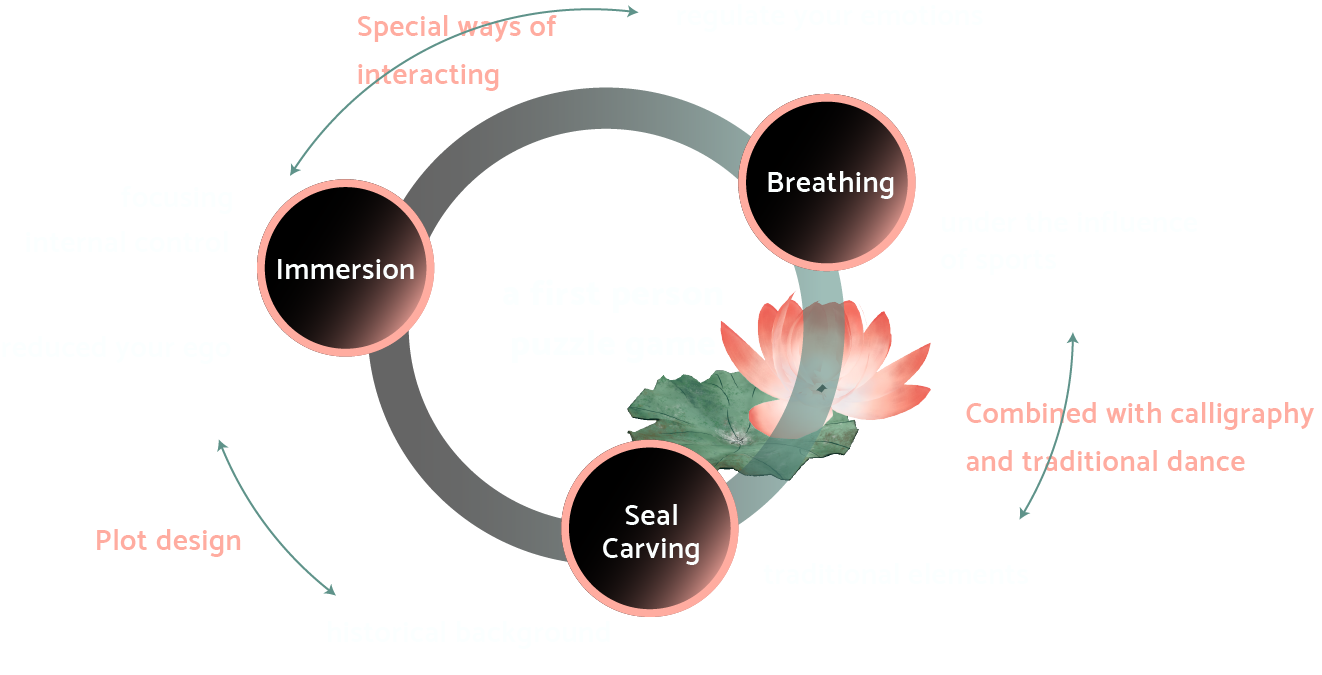
Immersion is a major feature of games.
I want to analyze the causes and influencing factors of immersion in games
from the underlying logic, and whether the immersion and information transmission of games will change when introducing other interactive methods (taking breathing as an example).
Therefore, I chose seal carving-a skill that focuses on breathing-as the theme and made a game. This also made me start to think about the future use and social value of this attempt.
Preliminary research
Conclusion: a first person puzzle game
story, immersion, self awareness
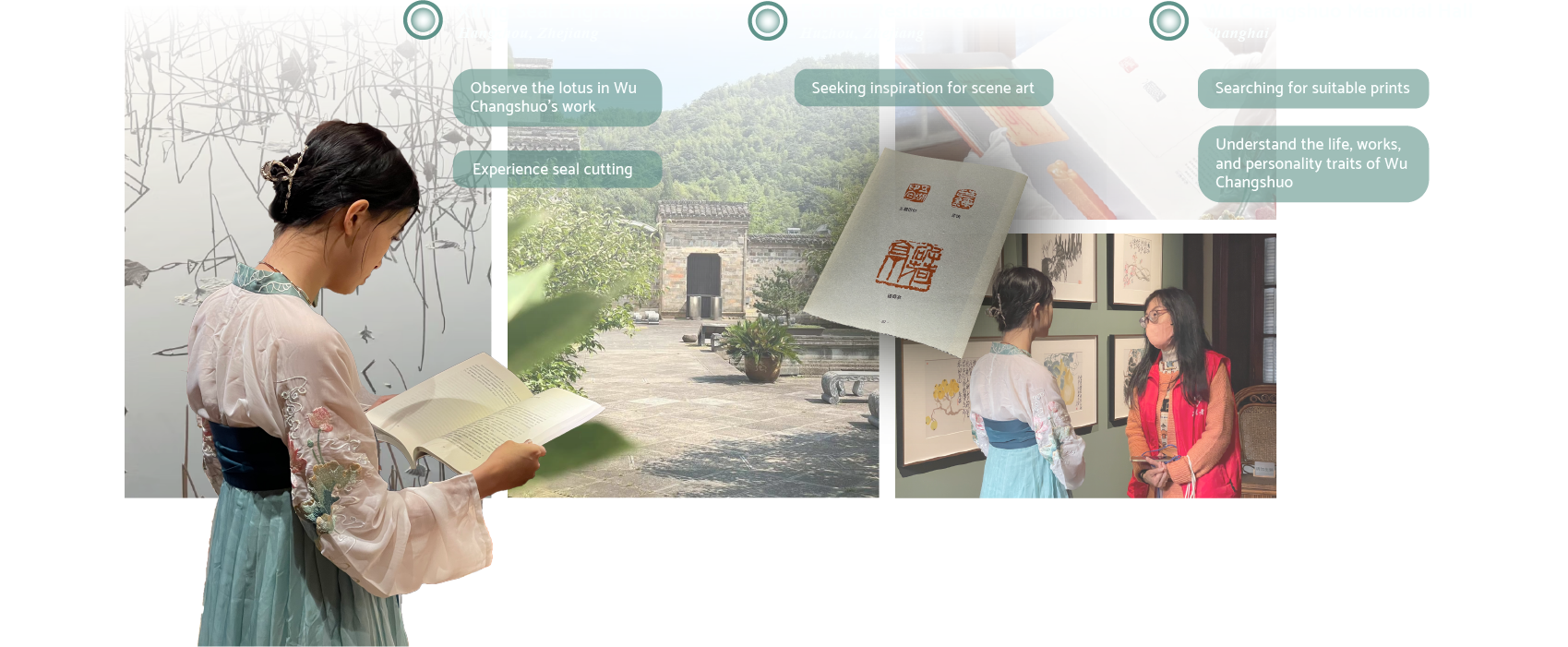
Field Research
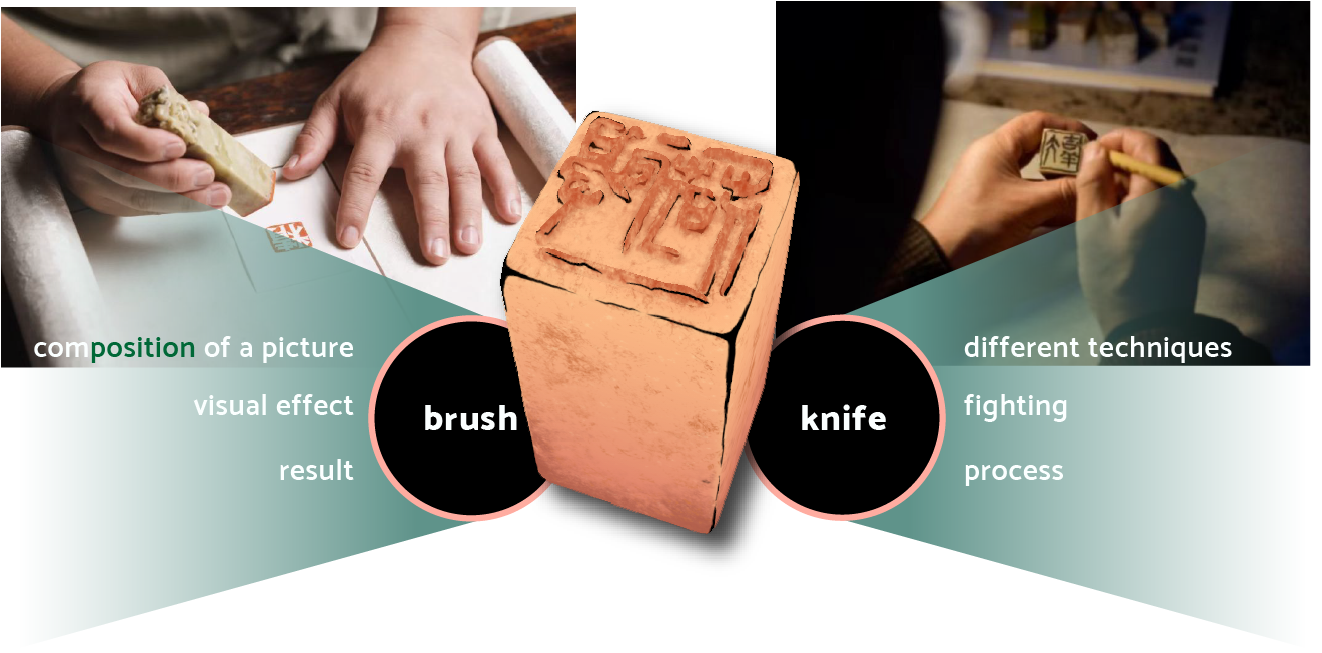
Seal Carving
Seal cutting is calligraphy on stone,
which requires a soft brush and a hard carving knife.
Technical investigation
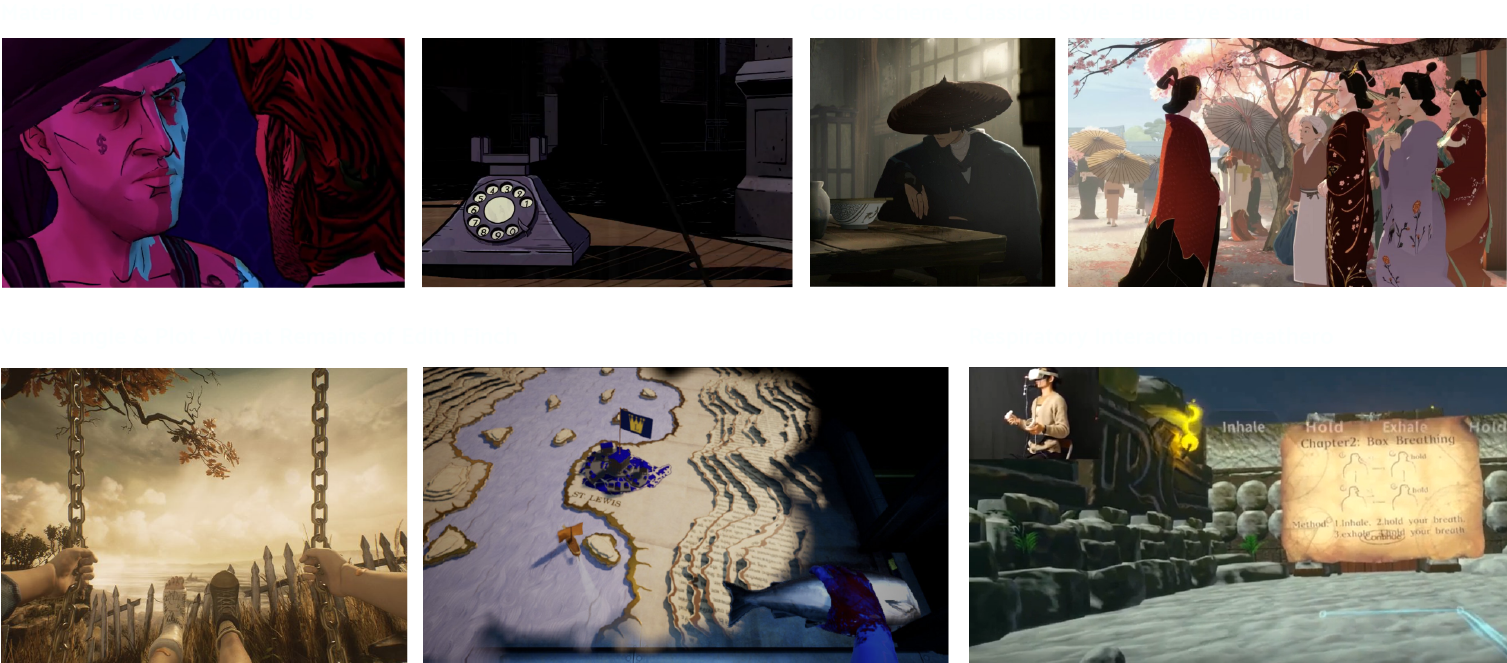
Reference
Game design
Storyboard
During his grandmother’s funeral, the protagonist learned that he had some legacy to be inherited and he must reach the old house from his childhood. The path was desolated, and he should explore the surroundings and look for directions.